Rosemary
(Salvia rosmarinus)
Identification
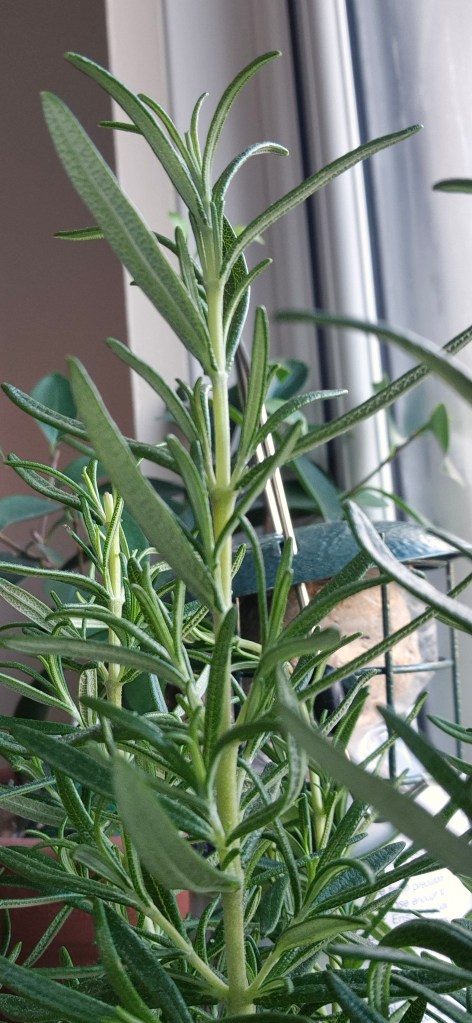
An evergreen, woody shrub that grows upright or trailing, usually reaching 2–6 feet (60–180 cm). Its narrow, needle-like leaves are dark green above and silvery underneath. Small blue, purple, pink or white flowers grow along the stems, mainly in spring and early summer. The foliage has a distinctive, pine-like fragrance.
Growing and Care
Grows best in full sun and well-drained soil. It is well suited to containers, raised beds and gravel gardens. Once established, it tolerates dry conditions but dislikes waterlogged soil.
Generally hardy throughout much of the UK, established plants can tolerate temperatures down to approximately -8°C. Young plants and container-grown specimens may need protection during severe frosts.
Prune lightly after flowering to maintain a compact shape. Avoid cutting into old, woody stems, as these may not produce new growth.
Culinary Uses
The strong, aromatic flavour complements lamb, chicken, potatoes, roasted vegetables, breads and marinades. Fresh or dried leaves can be used in cooking, but should be added sparingly as the flavour is quite powerful.
Traditional Wellness Uses
Traditionally associated with memory, concentration and general wellbeing. Rosemary has also been used in herbal infusions and aromatic baths.
In traditional herbal medicine, preparations have been used for mild digestive complaints and muscular discomfort. However, scientific evidence supporting these uses is limited.
Disclaimer: Traditional uses are not necessarily proven medical treatments. Seek professional advice before using rosemary medicinally.
Harvesting and Storing
Sprigs can be harvested throughout the year, although the soft new growth in spring and summer generally has the best flavour. Avoid removing too much growth at once.
Fresh sprigs can be kept in the refrigerator for around a week. For longer storage, dry them in a well-ventilated place or freeze in airtight bags.
Companion Planting
Grows well alongside thyme, sage, oregano and lavender, which share similar Mediterranean preferences for sunny positions and well-drained soil.
It is traditionally planted near cabbages, carrots and beans because its strong fragrance is thought to deter certain pests. However, there is limited scientific evidence to support this claim.
Avoid planting alongside vegetables that require consistently moist soil, as their watering requirements differ.

