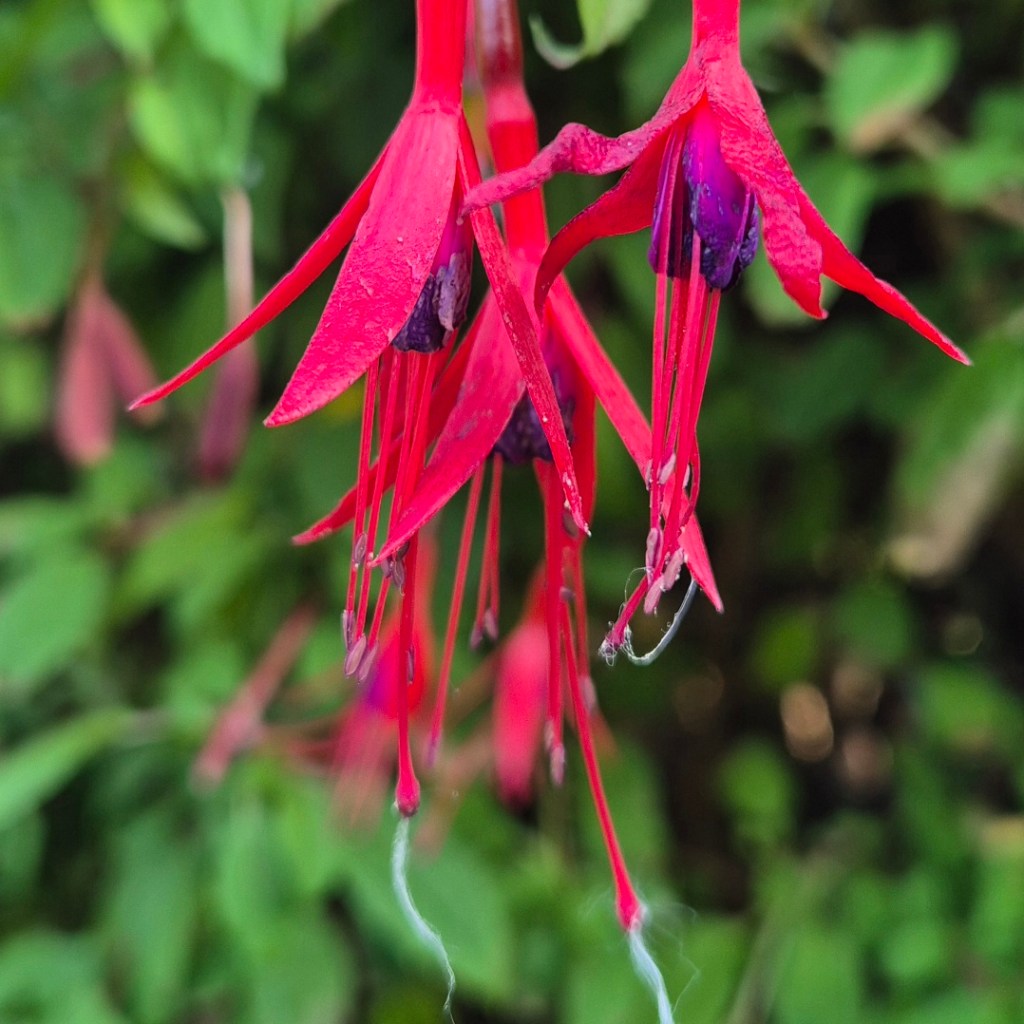
Fuchsia flowers have a unique mechanism that makes bees work harder. The flower’s long, dangling stamens are positioned well below the petals, meaning that when a honeybee lands to collect pollen, it must stretch, hang upside down and vigorously vibrate its wings. This helps the bee to collect a large amount of pollen.
· Common Name — Hardy Fuchsia; Magellan Fuchsia; Hummingbird Fuchsia; Lady’s Eardrops
· Scientific Name — Fuchsia magellanica
· Name meaning — Fuchsia honours Leonhart Fuchs (1501–1566), a German physician and botanist. Magellanica refers to the Strait of Magellan in southern Chile, close to part of the plant’s native range.
· Family — Onagraceae, the evening primrose family.
· Native — The plant was first discovered in the Caribbean (modern-day Haiti and the Dominican Republic) in 1639 by French monk and botanist Charles Plumier. Central and southern Chile and southern Argentina, including Patagonia.
· Flowering Season — Summer into autumn, typically July to October in the UK.
· Flower Colours — Usually scarlet or crimson red sepals and flower tubes with contrasting purple or violet petals. Some varieties have pink, white or paler flowers.
· Typical Height — Around 1.5–2.5 metres, although established plants can reach around 3 metres in favourable conditions.
· Lifespan — Perennial, deciduous shrub. The foliage and upper growth may die back in colder winters, but the plant can regrow from its hardy roots.
· Habitat — Moist, temperate woodland, forest edges, scrub and other damp habitats, particularly in the mountainous regions of southern Chile and Argentina.
· Pollinators — Primarily hummingbirds in its native habitat. Bumblebees and other insects also visit the flowers, particularly where the plant has become naturalised outside its native range.
· Main Uses — Primarily grown as an ornamental garden shrub, hedge or wildlife-garden plant. Its berries are edible, although they are not especially valued as a fruit crop. It has also been recorded as having medicinal and environmental uses.
· Symbolism — Fuchsia is commonly associated with grace, beauty, elegance and delicate love, reflecting its distinctive hanging flowers.
· Interesting Fact — Fuchsia magellanica is one of the hardiest fuchsia species and can survive outdoors through much of the UK.
document.addEventListener(‘contextmenu’, function(e) { e.preventDefault(); }); document.addEventListener(‘dragstart’, function(e) { if (e.target.tagName === ‘IMG’) { e.preventDefault(); } }); Trip & Hendry
Leave a comment