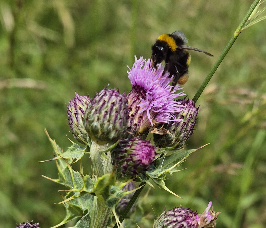
Creeping Thistle & Bumble Bee
A wildflower meadow is like a busy little neighbourhood. It is an ecosystem full of life and productivity.
Generally speaking, wildflowers that are native to a region and are generally the best choice for supporting local ecosystems, but some non-native wildflowers become naturalised and become part of the local ecosystem.
It is important to note that there are plenty introduced plants that can become invasive and displace native species.
Back to the wildflower neighbourhood, what is going on in the meadow?
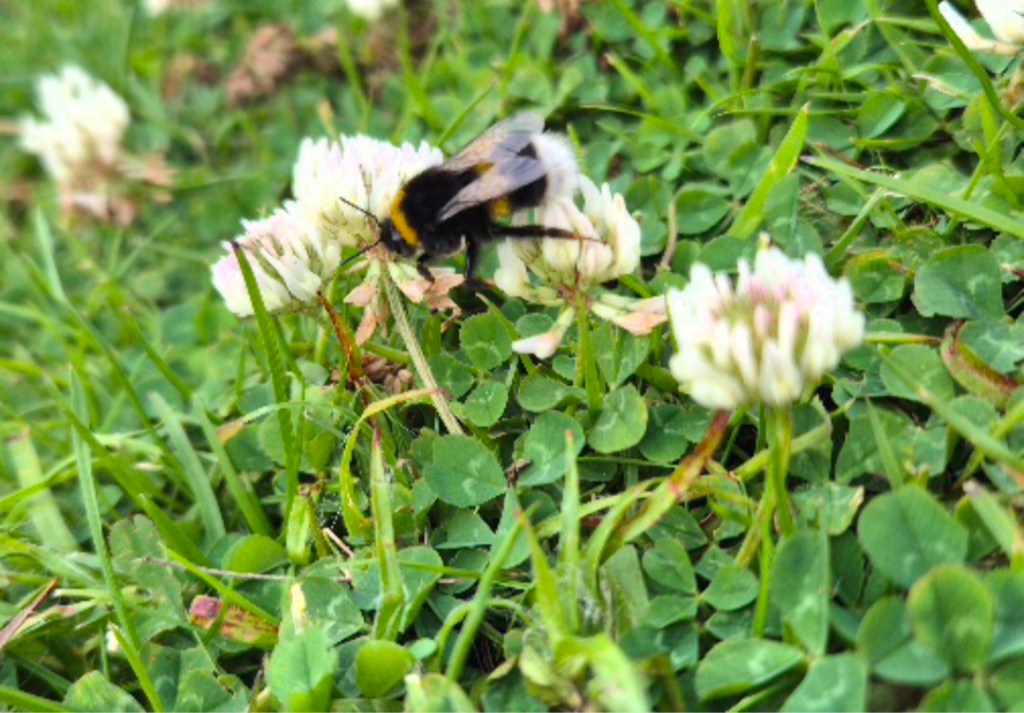
Throughout the seasons, different species of wildflowers are providing food to the insects. The bees, butterflies, hoverflies, beetles and other insects are all collecting nectar and pollen.
These insects become food for the birds, bats, frogs, spiders and the other insect eating wildlife that live in the leaves, stems, seed heads and the soil and the area around the meadow. The meadow becomes a place of shelter for insects and other tiny creatures.
The insects and wildlife help the flowers to produce seeds, allowing plants to spread and grow in other areas. Wildflower roots hold soil together and add organic material as plants die back and break down. Healthy soil is home to an enormous number of tiny organisms.
To summarise, wildflower meadows provide food, shelter and breeding places for wildlife, help plants reproduce, support healthy soil and form part of the food webs that keep ecosystems functioning.